Taiwan’s Rising Geopolitical Importance
In recent years, Taiwan has become one of the most critical flashpoints in global geopolitics. With China’s increasing military presence near the island and mounting pressure on Taiwan, the question of how far this conflict could escalate is on many people’s minds. Taiwan, an island nation just off the coast of mainland China, is not just geographically significant but also economically vital, especially for the semiconductor industry. Taiwan’s geopolitical role is set to only increase as the relationship between the U.S., China, and Taiwan continues to evolve.
This blog will examine the latest developments in Taiwan, analyze the potential for escalation, and explore the broader implications for global security. By breaking down the situation, we can understand the full context of the tension and what the future might hold.
1. Background: The Taiwan-China Conflict
A. Taiwan’s Status and Its Relationship with China
Taiwan, officially the Republic of China (ROC), has maintained a separate government and military since the end of the Chinese Civil War in 1949. However, China, which governs the People’s Republic of China (PRC), has never accepted Taiwan’s independence. Beijing views Taiwan as a breakaway province that must eventually be reunified with the mainland, even though Taiwan operates as a fully functioning democracy with its own elected officials.
For years, Taiwan has maintained a delicate balance between asserting its sovereignty and avoiding direct conflict with China. The United States, along with many other countries, officially recognizes the One China policy, acknowledging Beijing’s claim over Taiwan, but unofficially supports Taiwan’s defense and democratic system.
B. China’s Growing Military Activities Around Taiwan
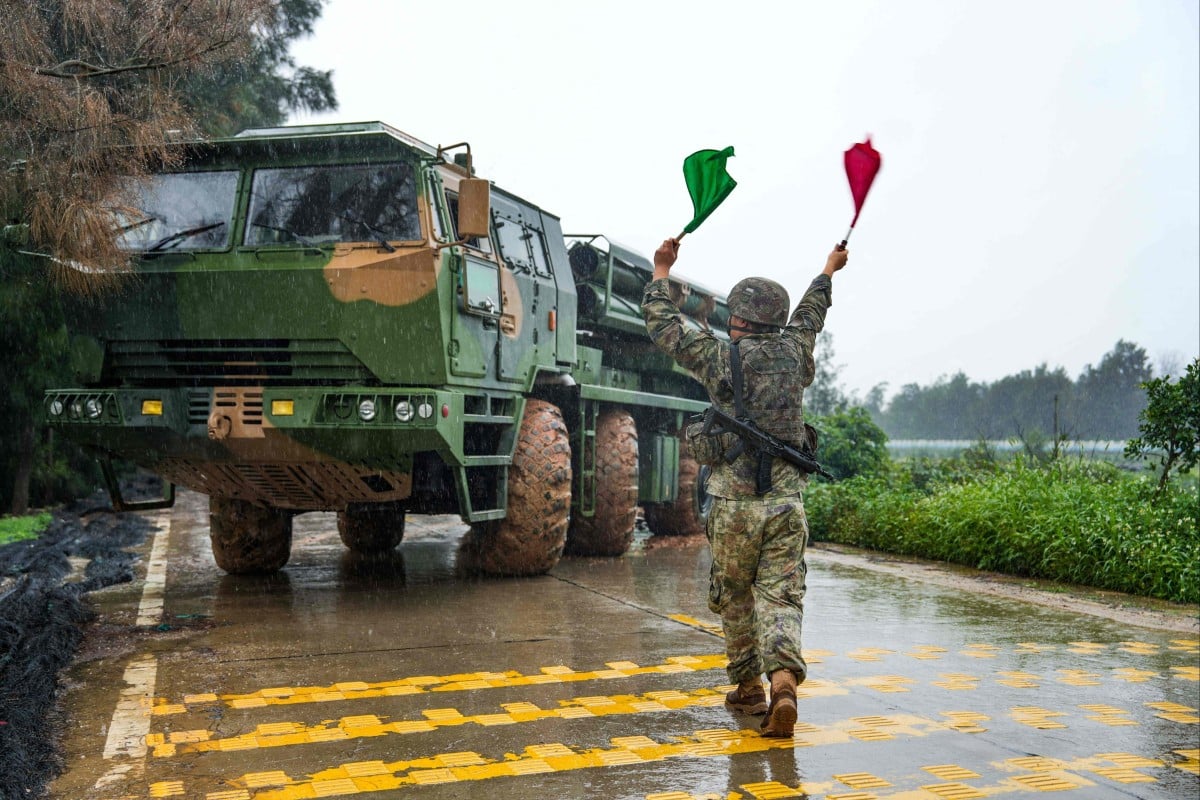
In recent years, China has ramped up military exercises and displays of force around Taiwan, frequently sending military jets and warships near Taiwan’s airspace and territorial waters. China’s military buildup around Taiwan has intensified fears of a potential invasion, with analysts warning that Beijing might choose to act more aggressively in the near future.
China has made it clear that it will not rule out using force to achieve reunification with Taiwan. The frequent military drills near Taiwan’s borders, the construction of more advanced military technology, and the public rhetoric from Chinese leaders all point to an increasingly hostile stance. As these military activities grow more frequent and intense, it has raised alarms in both Taiwan and the international community about the potential for military escalation.
2. The U.S. Role in Taiwan’s Security
A. America’s Strategic Interest in Taiwan
Taiwan is strategically important to the United States for several reasons. First and foremost, Taiwan plays a key role in global semiconductor production, with Taiwanese companies like TSMC (Taiwan Semiconductor Manufacturing Company) dominating the industry. TSMC is crucial to the production of semiconductors used in everything from smartphones to military equipment, making Taiwan an essential player in the global technology supply chain.
Second, the U.S. views Taiwan as a critical ally in the Indo-Pacific region, especially as China’s power grows. A democratic Taiwan is seen as a counterbalance to China’s growing influence in the region. The U.S. has long adhered to the Taiwan Relations Act (TRA), which provides military support to Taiwan to help it defend itself without explicitly committing to direct intervention.
B. Increasing Military Aid and Support
Recently, the U.S. has increased its military aid to Taiwan, including selling advanced weapons systems and providing training for Taiwanese forces. In addition to these actions, the U.S. has strengthened its strategic military alliances with Japan, South Korea, and Australia, all of which view China as a growing threat. These moves are seen as a direct response to China’s increasing military assertiveness near Taiwan.
However, while the U.S. has committed to helping Taiwan defend itself, it has not explicitly guaranteed military intervention should China launch an invasion. This leaves the question of U.S. involvement in the event of conflict open, which could dramatically change the dynamics of the situation.
3. The Global Response to Taiwan’s Tensions
A. International Support for Taiwan’s Sovereignty
Taiwan’s position is complicated by its lack of formal recognition by the United Nations, as most countries, including the U.S., adhere to the One China policy. However, many nations, particularly in the West, have expressed strong support for Taiwan’s sovereignty and democracy. Taiwan has strong diplomatic support from the U.S., Japan, and several European nations, which continue to provide various forms of political, economic, and military assistance.
The support for Taiwan has been particularly evident in global forums like the United Nations, where countries like the U.S. have used their influence to ensure Taiwan is included in international organizations, despite China’s opposition. Moreover, Taiwan’s democratic governance, free speech, and rule of law have made it a beacon of liberal values in the Indo-Pacific, further bolstering international support.
B. China’s Opposition to International Involvement
China, on the other hand, maintains that Taiwan is an internal issue and opposes any form of international intervention. China has leveraged its economic power to isolate Taiwan diplomatically by pressuring other nations and international organizations to exclude Taiwan. Additionally, China has ramped up its public stance, threatening countries with severe economic consequences if they engage with Taiwan too closely.
This diplomatic standoff between China and Taiwan, coupled with the growing military presence near Taiwan’s borders, creates a volatile situation. It raises the risk of miscalculation or unintended escalation, especially as China continues to expand its global economic and military influence.
4. Potential Scenarios for Escalation
A. Military Conflict and Invasion Risks
The most obvious risk is a military conflict between China and Taiwan. While the U.S. has made it clear it will not engage in direct combat unless Taiwan is attacked, a Chinese invasion would force the U.S. and other allies to make tough decisions. If Beijing pushes too far, the U.S. may have to intervene in defense of Taiwan, triggering a larger regional conflict.
Some analysts speculate that a full-scale invasion could take place within the next few years, especially as China continues to enhance its military capabilities. However, such an invasion would not be without massive risks, both for China and for global stability. A military confrontation would likely lead to heavy casualties, significant infrastructure damage, and destabilize the entire region.
B. Diplomatic and Economic Isolation
Another potential escalation could occur through diplomatic and economic means. China could attempt to further isolate Taiwan diplomatically, increasing pressure on countries and international organizations to cut ties with Taipei. Economically, China could leverage its market power to impose sanctions on nations that engage with Taiwan, attempting to cripple its economy and isolate it from the international community.
While this would not directly lead to war, it would increase the political and economic pressure on Taiwan, forcing it to either bend to Chinese demands or risk further isolation. The impact on the global economy, particularly the semiconductor industry, would be profound, which might push other countries to step in diplomatically.
C. Cyber Warfare and Proxy Conflicts
An alternative form of escalation could involve cyber warfare and proxy conflicts. Both China and Taiwan, along with the U.S. and other allies, have significant cyber capabilities. If tensions rise, China could intensify its cyberattacks on Taiwanese infrastructure, disrupting communication, power grids, and critical industries. Taiwan, in turn, would likely retaliate with similar tactics.
While this type of warfare would avoid full-scale military engagement, it could still lead to widespread chaos and instability, especially in a globally connected world.
5. The Role of International Diplomacy
A. The Importance of Diplomatic Engagement
While military threats loom large, diplomatic efforts are the key to preventing an all-out war over Taiwan. The international community, including the United States, European Union, and ASEAN countries, must continue to pressure China to adhere to peaceful means of resolving the Taiwan issue. Diplomatic efforts should focus on maintaining peace in the Taiwan Strait, ensuring Taiwan’s sovereignty is respected, and keeping communication open between all parties involved.
B. Global Peacebuilding Initiatives
Beyond the rhetoric of war, international peacebuilding initiatives will play a critical role in easing tensions. Confidence-building measures, such as military-to-military communication channels between China, the U.S., and Taiwan, can help reduce the risk of accidental escalation. Multilateral talks involving China, Taiwan, and the U.S. could help to address security concerns while maintaining Taiwan’s right to self-determination.
6. Conclusion: The Path Ahead for Taiwan
Taiwan finds itself at a crossroads, with rising tensions from China and the growing involvement of the U.S. and its allies. The situation is increasingly fragile, but there are still opportunities for diplomacy to prevent further escalation. The international community’s commitment to a peaceful resolution, combined with Taiwan’s resilience and strategic importance, could play a pivotal role in ensuring that tensions do not spiral into full-scale conflict.
However, the risks remain high. As China continues to assert its claims over Taiwan, the situation will only become more complicated. For now, the world watches closely, hoping for a peaceful resolution but preparing for the possibility that the conflict could escalate.
Understanding the dynamics at play in Taiwan is essential for anyone interested in global politics and the security of the Indo-Pacific region. As events continue to unfold, the world must remain vigilant and engaged in efforts to maintain peace and stability.