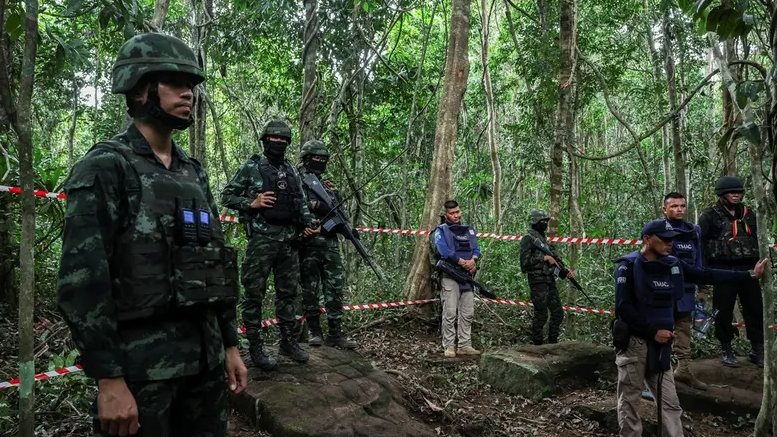
In a move that highlights the ongoing fragility of peace along their shared border, Thailand’s military has maintained full alert status, despite a recently agreed-upon 72-hour ceasefire with Cambodia. This ceasefire is part of an effort to ease tensions following recent skirmishes between Thai and Cambodian forces in the border region. However, despite the ceasefire agreement, Thailand has opted to keep its military on high alert, signaling the underlying distrust and readiness for potential conflict.
This decision to remain on full alert comes at a critical juncture in the two countries’ relations, as the ceasefire marks only a temporary solution to the broader border issues that have plagued the nations for decades. The situation raises important questions about the stability of the ceasefire, the effectiveness of diplomatic efforts, and the role of military preparedness in maintaining peace.
In this article, we will explore the details of the ceasefire agreement, the reasons behind Thailand’s decision to maintain a high state of alert, and the broader implications for the region’s stability.
Border Disputes Between Thailand and Cambodia
The border between Thailand and Cambodia is one of the most contentious in Southeast Asia. The two nations share a long and complex border that stretches over 800 kilometers, and numerous territorial disputes have arisen over the years, primarily centered around the areas surrounding the Preah Vihear Temple, a UNESCO World Heritage Site.
The Preah Vihear dispute is one of the most well-known and significant border issues between Thailand and Cambodia. The International Court of Justice (ICJ) ruled in favor of Cambodia in 1962, granting the temple and surrounding land to Cambodia, but the decision did not resolve all territorial disputes. Since then, clashes between Thai and Cambodian forces have occurred intermittently, with both sides accusing each other of encroaching on sovereign land. These skirmishes have at times resulted in casualties, making the issue one of ongoing tension.
In addition to the Preah Vihear dispute, there are also other areas along the border where territorial claims are in dispute. These include land and resource-rich areas that have further complicated relations. Despite various attempts at diplomatic resolution, the border issues have remained unresolved for decades, with both sides showing little sign of relinquishing their claims.
The Ceasefire Agreement: A Temporary Solution
The most recent development in this long-standing conflict is the 72-hour ceasefire that was agreed upon between Thailand and Cambodia. This ceasefire was brokered with the hope of de-escalating the tension and allowing both sides to address the issues diplomatically. The ceasefire comes after a series of military confrontations that resulted in casualties and sparked fears of a wider conflict in the region.
The ceasefire agreement is seen as a short-term solution, designed to prevent further escalation and to provide an opportunity for both nations to engage in dialogue. However, the 72-hour timeline suggests that this ceasefire is not a permanent resolution, and the underlying issues remain unresolved. The short duration of the ceasefire raises questions about its effectiveness and whether it will be extended or replaced by a more comprehensive peace agreement.
As part of the ceasefire terms, both Thailand and Cambodia have agreed to halt military actions and refrain from provocative actions along the border. The ceasefire is also designed to facilitate the return of displaced civilians and ensure the safety of those living in the border areas. Despite these positive steps, the decision to maintain military readiness shows that both sides are still deeply concerned about the stability of the situation.
Thailand’s Military on Full Alert: Reasons and Concerns
While the ceasefire agreement is a positive step toward reducing immediate tensions, Thailand’s decision to maintain its military on full alert underscores the country’s cautious stance and its reluctance to fully trust the ceasefire terms. Several factors contribute to this decision, including the following:
-
Past Experiences with Unstable Ceasefires
Thailand has experienced numerous ceasefire agreements in the past that ultimately broke down, often due to violations or misunderstandings. This history of unstable truces has made Thailand’s military leadership wary of relying too heavily on ceasefire agreements without clear mechanisms for enforcement. The country’s military remains prepared for potential violations, whether intentional or accidental, and has opted to stay on high alert to avoid being caught off guard. -
Ongoing Border Disputes
Despite the ceasefire, the underlying border disputes between Thailand and Cambodia remain unresolved. The areas around Preah Vihear Temple, as well as other contested regions, continue to be sources of tension. Thailand’s military is likely maintaining a high state of readiness in case these disputes escalate into further conflict, especially given the historical sensitivity of the territory. -
Political and National Security Concerns
Thailand’s political leadership has been under pressure to take a strong stance on national security, especially in the face of regional instability. The Thai military is often called upon to protect the nation’s sovereignty and territorial integrity, and maintaining full alert status sends a signal to both Cambodia and the international community that Thailand is committed to defending its borders. -
Internal Military Dynamics
The Thai military is also maintaining a high level of readiness to ensure that it can respond quickly to any potential escalation. The military’s internal dynamics, including the need to ensure cohesion and discipline within its ranks, may also play a role in this decision. By staying on alert, the military leadership is reinforcing its preparedness to act if necessary, whether through diplomacy or force.
Impact on Regional Security
The decision to maintain a full military alert in Thailand, despite the ceasefire, has significant implications for regional security. The situation at the Thai-Cambodian border is not just a bilateral issue; it has the potential to affect the broader Southeast Asian region.
-
ASEAN’s Role in Conflict Resolution
The Association of Southeast Asian Nations (ASEAN) has long been involved in efforts to mediate disputes in the region. As both Thailand and Cambodia are ASEAN members, the organization has a vested interest in ensuring that the ceasefire holds and that tensions do not escalate. However, ASEAN’s role in resolving the conflict is limited by the organization’s principle of non-interference in the domestic affairs of its members. While ASEAN can offer diplomatic support, the actual resolution of the border issue will ultimately rest on the two countries involved. -
Impact on Neighboring Countries
The heightened military alert in Thailand could potentially have an impact on neighboring countries, such as Laos and Vietnam. These nations are closely watching the situation, as any instability in the region could disrupt trade, security, and diplomatic relations. The ongoing tensions also have the potential to affect economic activities in the region, particularly in areas that rely on cross-border trade and cooperation. -
Global Implications
The Thailand-Cambodia dispute, while regional in nature, also has broader global implications. As Southeast Asia continues to be an important hub for international trade and commerce, any conflict or instability in the region could disrupt global supply chains, particularly in the areas of agriculture and energy. Furthermore, the conflict could draw the attention of larger powers, including China and the United States, both of which have strategic interests in the region.
The Path Forward: Can the Ceasefire Hold?
The 72-hour ceasefire agreement between Thailand and Cambodia is a step in the right direction, but its long-term success will depend on several factors. Both countries must demonstrate a genuine commitment to resolving their border issues peacefully and diplomatically. While maintaining a military alert is understandable given the history of tensions, it is important for both nations to take meaningful steps toward building trust and finding a permanent solution to their disputes.
Moving forward, Thailand and Cambodia will need to engage in continued dialogue, backed by concrete actions, to ensure that this ceasefire is not just another temporary pause in a longstanding conflict. International support and mediation, particularly from ASEAN, could play a crucial role in fostering a more comprehensive and lasting peace agreement.
Conclusion: A Fragile Peace and the Road Ahead
While the 72-hour ceasefire between Thailand and Cambodia provides a temporary respite from border tensions, Thailand’s decision to maintain full military alertness reflects the uncertainty that still looms over the region. The underlying border disputes remain unresolved, and the risk of further skirmishes remains high. However, the ceasefire represents a critical opportunity for both nations to pursue diplomatic solutions and build a foundation for long-term peace.
As the situation unfolds, it is crucial for both Thailand and Cambodia to demonstrate restraint and a commitment to resolving their differences through dialogue, rather than military force. The international community, particularly ASEAN, must continue to encourage peaceful negotiations and provide support for efforts aimed at finding a lasting resolution to this longstanding conflict.
This delicate balance between peace and preparedness will define the future of relations between Thailand and Cambodia and will have lasting implications for the security and stability of Southeast Asia.