Bitcoin has come under heavy selling pressure in recent weeks, falling nearly 32% from its all-time high of $126,000 recorded on October 6. While price weakness and large ETF outflows signal caution among traditional investors, on-chain data reveals that not everyone is stepping away from the market.
Despite billions of dollars leaving Bitcoin exchange-traded funds (ETFs), one major institutional group — along with retail investors — continues to accumulate BTC, suggesting confidence beneath the surface.
Bitcoin ETFs Record Heavy Outflows
U.S. spot Bitcoin ETFs, often used as a barometer for institutional sentiment, have seen significant capital exit the market. According to on-chain analytics platforms, cumulative ETF outflows have reached approximately $5.5 billion from their peak levels.
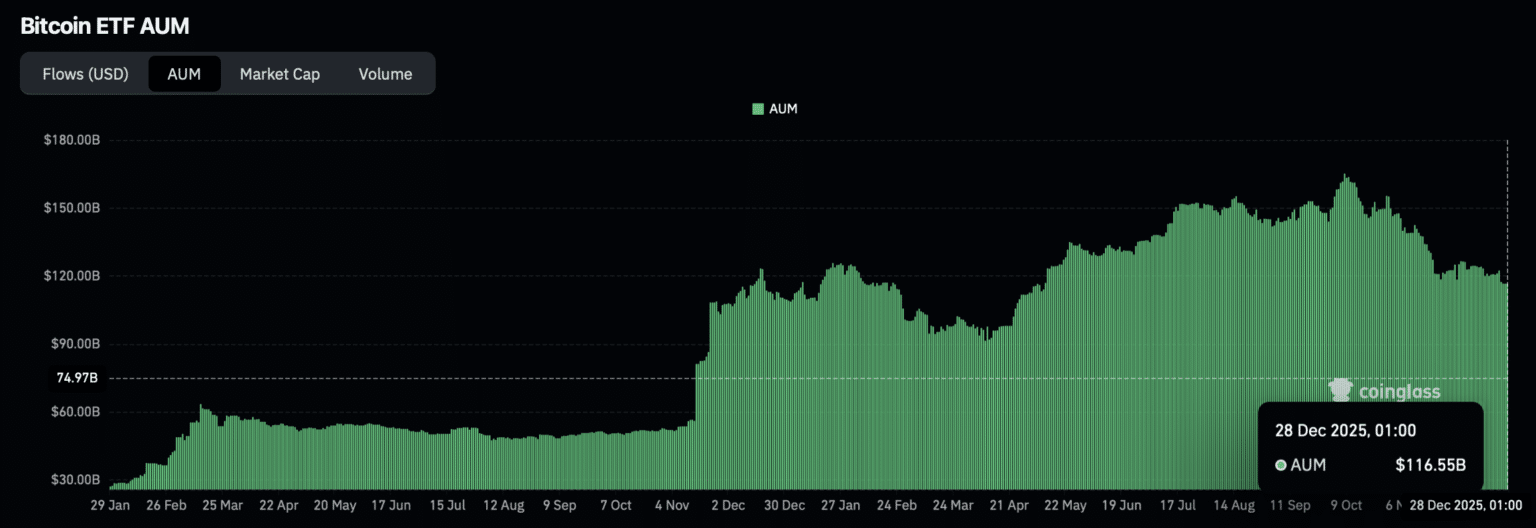
As a result, total Assets Under Management (AUM) across Bitcoin ETFs have dropped sharply to around $116.5 billion, down from a high of over $163 billion.
This trend reflects a broader pullback by traditional investors during a period of weak market sentiment, as Bitcoin trades within a consolidation range between $85,000 and $90,000.
ETF outflows are not unusual during corrective phases, especially when macroeconomic uncertainty and tighter financial conditions dominate investor psychology.
BlackRock Investors Continue to Accumulate Bitcoin
While most ETF participants are reducing exposure, investors linked to BlackRock’s U.S. spot Bitcoin ETF are showing a very different behavior.
Over the past twelve days, BlackRock-related investors have recorded six separate inflow events, purchasing more Bitcoin than any other institutional group. In total, this group added approximately 1.32 million BTC, valued at nearly $1.16 billion.
BlackRock currently controls the largest institutional share of Bitcoin, holding BTC worth more than $67.5 billion, making its positioning a critical signal for the broader market.
This continued accumulation suggests that long-term institutional conviction remains intact, even as short-term sentiment weakens.
Retail Investors Quietly Build Positions
Retail investors are also showing renewed confidence. Data from blockchain analytics platforms indicates that individuals buying Bitcoin directly through centralized exchanges have been accumulating BTC consistently since early December.
Last week alone, retail purchases totaled nearly $890 billion, marking four consecutive weeks of steady supply absorption.
This pattern often appears during consolidation phases, when patient buyers accumulate assets while prices remain range-bound.
Institutional Outlook Still Evolving
BlackRock CEO Larry Fink has recently signaled a notable shift in perspective toward Bitcoin. Once a vocal critic, Fink has now described BTC as having a “huge future use case,” reflecting growing institutional acceptance.
Although the long-term applications of Bitcoin remain a topic of debate, such comments underline the evolving narrative around digital assets and their role in global finance.
This shift could open the door for further institutional involvement, particularly if macroeconomic conditions turn more favorable.
What Comes Next for Bitcoin?
Bitcoin’s ETF data now paints a fragmented picture rather than a unified market view. While traditional investors continue to reduce exposure through ETFs, strong accumulation by BlackRock-linked investors and retail buyers suggests underlying demand remains healthy.
Key takeaways:
-
Bitcoin is down 32% from its peak
-
ETFs have seen $5.5bn in outflows
-
BlackRock investors continue to buy aggressively
-
Retail accumulation remains steady
-
Market sentiment remains cautious but not broken
Final Thoughts
Bitcoin’s current phase highlights a classic market dynamic: short-term fear versus long-term conviction. While price action and ETF flows point to caution, steady accumulation by major institutional players and retail investors suggests that confidence in Bitcoin’s long-term value has not disappeared.
As macro conditions, interest rate expectations, and regulatory clarity evolve, Bitcoin’s next major move will likely depend on which side of this divide gains momentum.