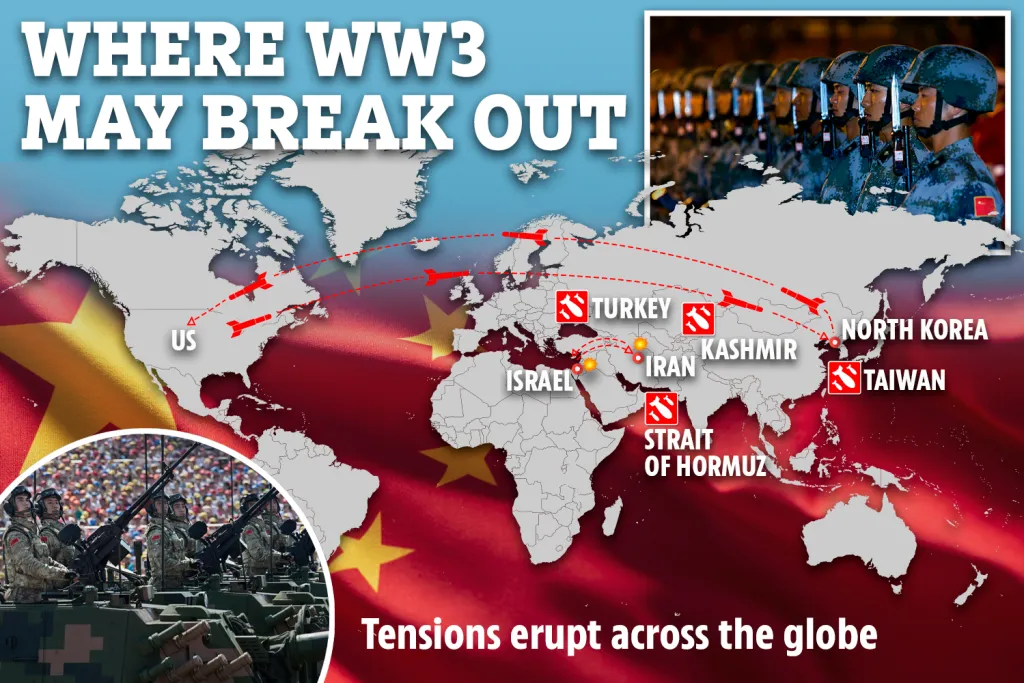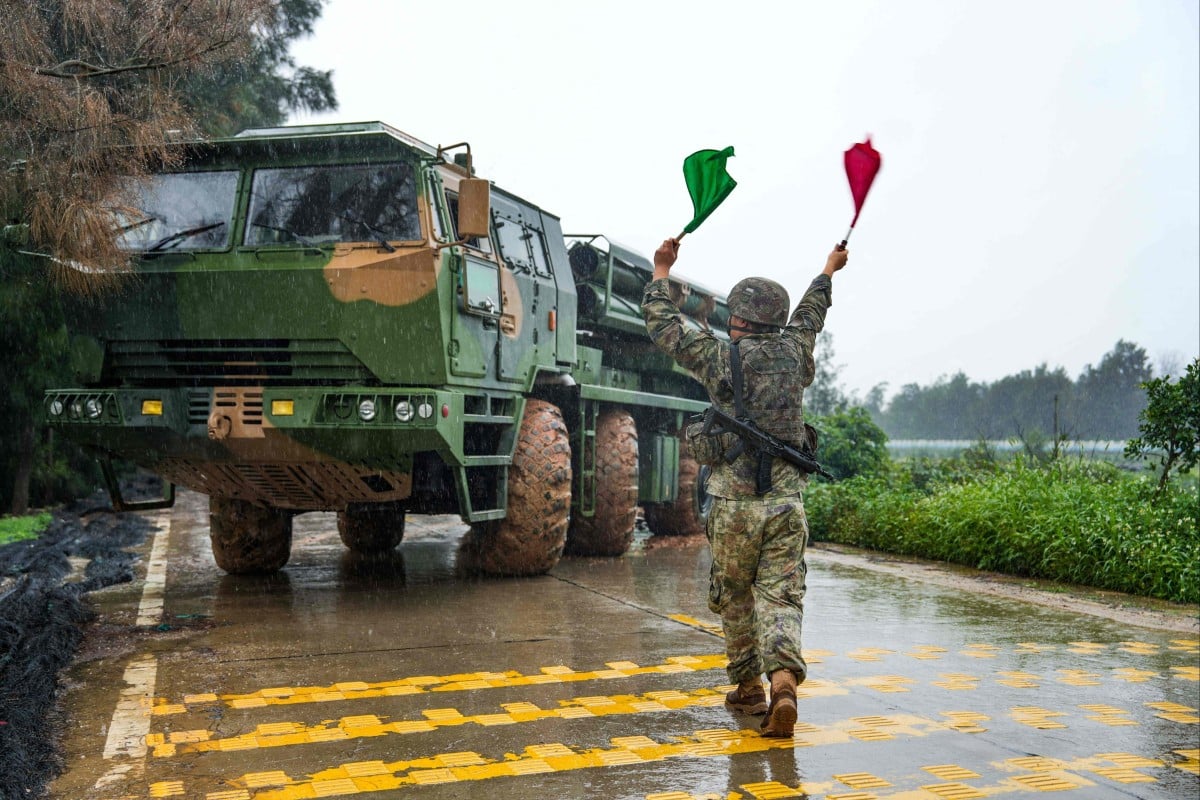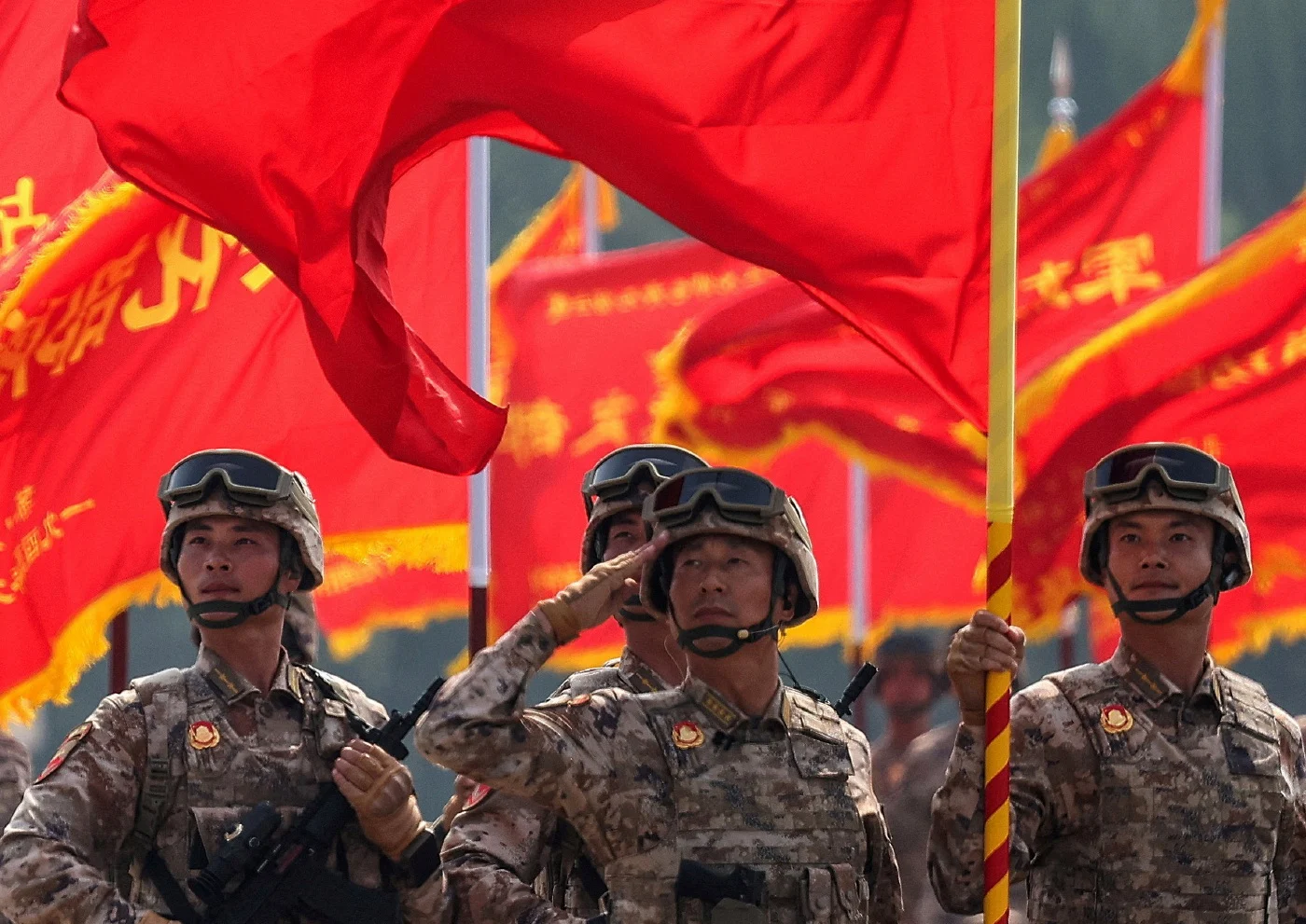
Amid growing geopolitical tensions in the Taiwan Strait, China has launched a new round of military exercises around Taiwan, signaling a heightened state of alert in the region. These drills come at a time when tensions between China and Taiwan, as well as between China and the United States, have reached new heights. The military exercises, which include naval and air operations, are seen as a show of force by China, underlining its firm stance on Taiwan and its territorial claims over the island.
The drills have drawn international attention, with many countries expressing concern over the potential for escalation into an open conflict. As the situation develops, it is crucial to examine the reasons behind China’s increased military activity, the potential implications for Taiwan and the broader region, and how the international community is responding.
In this article, we will break down the key details of these new war games, their significance in the context of rising tensions, and what they mean for regional and global security.
Background: The Taiwan Strait and China’s Territorial Claims
The Taiwan Strait has long been a flashpoint for tensions between China and Taiwan. Taiwan, officially known as the Republic of China (ROC), is a democratic and self-governing island located off the southeastern coast of China. Although Taiwan has its own government, military, and constitution, China considers it to be a breakaway province and has repeatedly stated its intention to reunify Taiwan with the mainland, by force if necessary.
Since the Chinese Civil War, Taiwan has remained politically and militarily separate from China, despite the claims of the People’s Republic of China (PRC) that Taiwan is part of its sovereign territory. The PRC’s stance on Taiwan has been clear: it sees the island as an integral part of its national territory, and it has made it a top priority to reunify Taiwan with mainland China, whether through diplomacy or military means.
In recent years, Taiwan’s growing ties with the United States and other Western countries, coupled with increasing military support, have intensified the pressure on Beijing. The United States has long had a policy of strategic ambiguity when it comes to Taiwan, maintaining unofficial ties with the island while simultaneously upholding the One-China Policy. However, the United States’ growing military assistance to Taiwan, particularly in the form of arms sales, has angered China and prompted repeated military responses.
Details of China’s Latest Military Drills
In response to what it perceives as increasing provocations from Taiwan and the United States, China has conducted another round of military exercises near Taiwan. These exercises are not new, as China has regularly held similar drills over the past few years, particularly in response to U.S. support for Taiwan. However, the timing of these latest war games and their scale have garnered significant attention.
The drills reportedly involve a combination of air and naval forces, including warships, fighter jets, and bombers, all of which are operating in close proximity to Taiwan’s airspace and territorial waters. According to Chinese state media, the military exercises are aimed at testing the readiness of China’s armed forces to respond to potential “separatist” activities and to assert its sovereignty over Taiwan. The drills are also seen as a demonstration of China’s ability to blockade the island and launch precision strikes, should the need arise.
-
Naval and Air Operations:
The Chinese military has sent a substantial number of naval ships and fighter jets into the Taiwan Strait. The operations include simulated blockades, amphibious landings, and other military maneuvers that are designed to showcase China’s ability to enforce its territorial claims over Taiwan. Additionally, China has reportedly deployed bombers capable of carrying long-range precision-guided missiles, sending a clear message of its military capabilities. -
Cyber Warfare and Electronic Warfare:
In addition to traditional military operations, China has also reportedly conducted cyber warfare exercises, focusing on disrupting Taiwan’s communication and defense infrastructure. The ability to cripple Taiwan’s military and civilian networks through cyber-attacks is a key part of China’s strategy in any potential conflict over Taiwan. -
Ballistic Missile Tests:
As part of the military drills, China has also conducted missile tests, some of which are believed to have been in the direction of Taiwan. These tests are seen as a demonstration of China’s missile capabilities and its ability to strike targets with precision.
Implications for Taiwan and Regional Security
The new round of Chinese war games comes at a time when Taiwan’s security situation is becoming increasingly precarious. While Taiwan has a capable military, it is heavily reliant on foreign support, particularly from the United States, which has pledged to help Taiwan defend itself in the event of a Chinese attack. The latest Chinese military drills serve as a stark reminder of the potential threat that Taiwan faces from its much larger neighbor.
-
Escalating Tensions:
The timing of these military exercises is particularly sensitive, as they follow a series of confrontations in the region. Taiwan has reported numerous incursions by Chinese aircraft into its airspace, and China has continued to increase its military presence in the Taiwan Strait. As China seeks to assert its dominance in the region, the risk of accidental escalation grows, potentially drawing in other regional powers. -
U.S. and Allies’ Role:
The United States has responded to China’s actions by reaffirming its commitment to Taiwan’s defense. U.S. officials have expressed concern over China’s increasingly aggressive stance and have called for diplomatic solutions to prevent conflict. Meanwhile, other regional powers, such as Japan and South Korea, are closely monitoring the situation, given the potential spillover effects of any conflict in the Taiwan Strait. The presence of U.S. military forces in the Pacific is seen as a counterbalance to China’s growing influence in the region. -
Taiwan’s Defensive Strategies:
In response to China’s growing military presence, Taiwan has been modernizing its military and strengthening its defense capabilities. Taiwan’s strategy, known as “asymmetric warfare,” focuses on investing in smaller, more mobile military units and advanced technologies such as drones, anti-ship missiles, and cyber capabilities. Taiwan’s leaders have also been seeking greater international support and strengthening ties with countries that share concerns about China’s territorial ambitions. -
Economic Impact:
The rising tensions in the Taiwan Strait also have economic implications, particularly for global trade. Taiwan is a key player in the global semiconductor market, and any conflict in the region could disrupt supply chains, affecting economies worldwide. Moreover, the Taiwan Strait is one of the busiest shipping lanes in the world, and any instability in the region could impact global shipping and trade routes.
International Reactions to China’s War Games
The international community has reacted with concern to China’s latest military activities around Taiwan. Several countries, including the United States, Japan, and Australia, have expressed their opposition to China’s increasing military presence in the Taiwan Strait. These countries have called for restraint and have emphasized the importance of maintaining peace and stability in the region.
-
U.S. Reaffirmation of Taiwan’s Security:
The U.S. has consistently emphasized its commitment to Taiwan’s defense under the Taiwan Relations Act, which obligates the U.S. to provide Taiwan with the means to defend itself. The latest Chinese war games have prompted a renewed commitment from the U.S. to assist Taiwan in strengthening its defenses. -
Japan’s Growing Concern:
Japan has also expressed growing concerns about China’s military activities near Taiwan, as the island’s security is of direct interest to Japan due to its geographical proximity. Japan’s Self-Defense Forces have been closely monitoring the situation, and the country has taken steps to bolster its defense capabilities in response to China’s increasing assertiveness in the region. -
ASEAN’s Neutral Stance:
The Association of Southeast Asian Nations (ASEAN), a regional bloc, has largely remained neutral on the issue, emphasizing the need for dialogue and peaceful resolution. However, individual ASEAN members have differing views, with some nations more sympathetic to China’s position and others voicing concern over Beijing’s growing influence in the region.
Conclusion: Rising Tensions and the Path Ahead
China’s new war games around Taiwan are a clear signal of its determination to assert its territorial claims over the island. The increasing military presence and provocative actions raise the risk of conflict, which could have far-reaching implications for regional and global security. As tensions continue to escalate, the international community must remain vigilant and continue to advocate for dialogue and peaceful solutions to prevent a larger crisis.
For Taiwan, the situation remains precarious, as it faces the challenge of defending itself against a much larger military power. The support of the United States and other allies will be critical in deterring Chinese aggression and ensuring that Taiwan’s sovereignty is respected. However, the growing military rivalry between China and Taiwan shows no signs of abating, and the coming years will likely be crucial in determining the future of cross-strait relations and regional stability.
As China’s military power continues to grow, the world will have to navigate a delicate balance between diplomacy and deterrence. The situation in the Taiwan Strait remains one of the most significant geopolitical flashpoints of the 21st century, and its outcome will shape the future of East Asian security and global power dynamics.