Quick Overview
The Middle East crisis in 2025 remains one of the most complex and sensitive global issues, involving political tensions, armed conflicts, humanitarian emergencies, and international involvement. While no single war defines the entire region, ongoing instability continues to affect global security, oil prices, trade routes, and diplomatic relations worldwide.
Detailed Analysis: Understanding the Middle East Crisis in 2025
The Middle East has long been a focal point of global attention due to its strategic location, energy resources, religious significance, and political complexity. In 2025, the crisis continues to evolve, with multiple conflicts overlapping and influencing one another.
Rather than one unified war, the region is facing interconnected crises that together create widespread instability.
Key Factors Driving the Middle East Crisis
1. Ongoing Regional Conflicts
Several areas in the Middle East remain affected by armed conflict:
-
Long-standing territorial disputes
-
Civil unrest and internal power struggles
-
Proxy conflicts supported by external powers
These conflicts are not isolated. Violence in one country often spills across borders, escalating tensions throughout the region.
2. Political Instability & Power Struggles
Many Middle Eastern nations face internal challenges, including:
-
Weak governance structures
-
Public dissatisfaction and protests
-
Leadership transitions and political uncertainty
Political instability often creates power vacuums, which can lead to armed groups gaining influence and worsening security conditions.
3. Role of Major Global Powers
The Middle East crisis is not limited to regional actors. Major world powers play a significant role:
-
The United States remains heavily involved through diplomacy and military presence
-
Russia maintains strategic interests and regional alliances
-
China focuses on economic partnerships and energy security
-
European nations engage through humanitarian aid and diplomacy
This international involvement increases complexity and raises the risk of global consequences if tensions escalate.
Humanitarian Impact: A Growing Concern
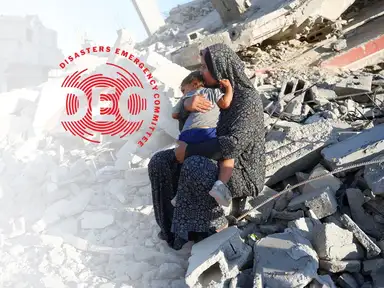
One of the most tragic outcomes of the Middle East crisis is its impact on civilians.
Humanitarian Challenges Include:
-
Displacement of millions of people
-
Shortages of food, clean water, and medical supplies
-
Damage to hospitals, schools, and infrastructure
Refugee movements from the Middle East continue to affect neighboring regions and even countries far beyond, creating global humanitarian and migration challenges.
Economic Impact on the World
1. Oil & Energy Prices
The Middle East plays a crucial role in global energy supply. Any instability in the region can lead to:
-
Rising oil prices
-
Increased fuel costs worldwide
-
Inflation in energy-dependent economies
Even rumors of escalation can impact financial markets.
2. Global Trade & Supply Chains
Key trade routes pass through or near the Middle East. Disruptions can affect:
-
Shipping and logistics costs
-
International trade timelines
-
Prices of consumer goods globally
This is why markets react quickly to news from the region.
Security & Military Implications
The crisis has serious security implications:
-
Increased military readiness among regional countries
-
Expansion of defense alliances
-
Heightened risk of miscalculations or unintended clashes
While a large-scale regional war is not inevitable, continued instability increases the chances of sudden escalation.
Role of Media & Information Warfare
In 2025, information warfare plays a major role:
-
Social media spreads unverified reports rapidly
-
Propaganda and biased narratives fuel fear
-
AI-generated content makes misinformation harder to detect
This environment often amplifies panic and misunderstanding, making it difficult for the public to distinguish facts from exaggeration.
Global Diplomatic Efforts
Despite tensions, diplomacy continues behind the scenes:
-
Peace talks facilitated by international organizations
-
Ceasefire negotiations in conflict zones
-
Humanitarian corridors and aid agreements
While progress is slow, diplomacy remains the primary tool for preventing wider conflict.
How the Middle East Crisis Affects Ordinary People Worldwide
Even for people living far from the region, the effects are real:
-
Higher fuel and food prices
-
Economic uncertainty
-
Increased geopolitical tension
-
Concerns over global security
The Middle East crisis is not just a regional issue — it is a global one.
Is the Situation Improving or Getting Worse?
The answer is mixed.
Signs of Hope:
-
Ongoing diplomatic engagement
-
International humanitarian efforts
-
Increased global awareness
Ongoing Risks:
-
Escalation of localized conflicts
-
Breakdown of negotiations
-
External interventions worsening tensions
The future depends largely on dialogue, restraint, and international cooperation.
Final Verdict: What Lies Ahead?
The Middle East crisis in 2025 remains unresolved but not uncontrollable. While the region continues to face serious challenges, a full-scale regional war is not inevitable.
Global leaders understand that further escalation would have devastating consequences — not just for the Middle East, but for the entire world.
Staying informed through reliable sources and avoiding sensationalism is essential in understanding this complex situation.