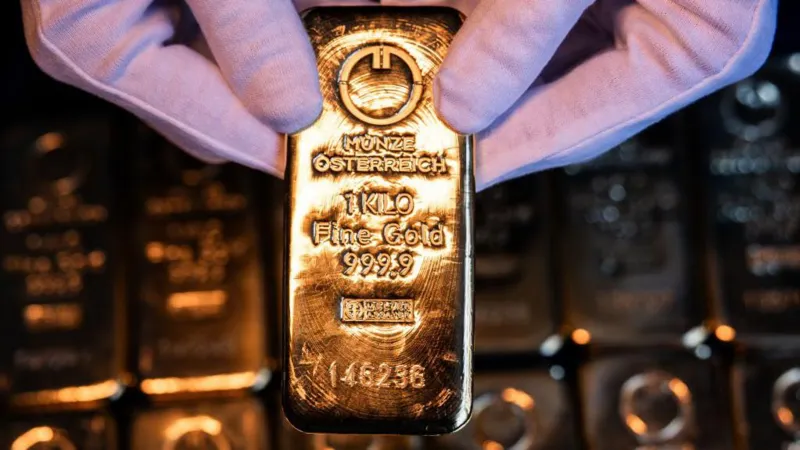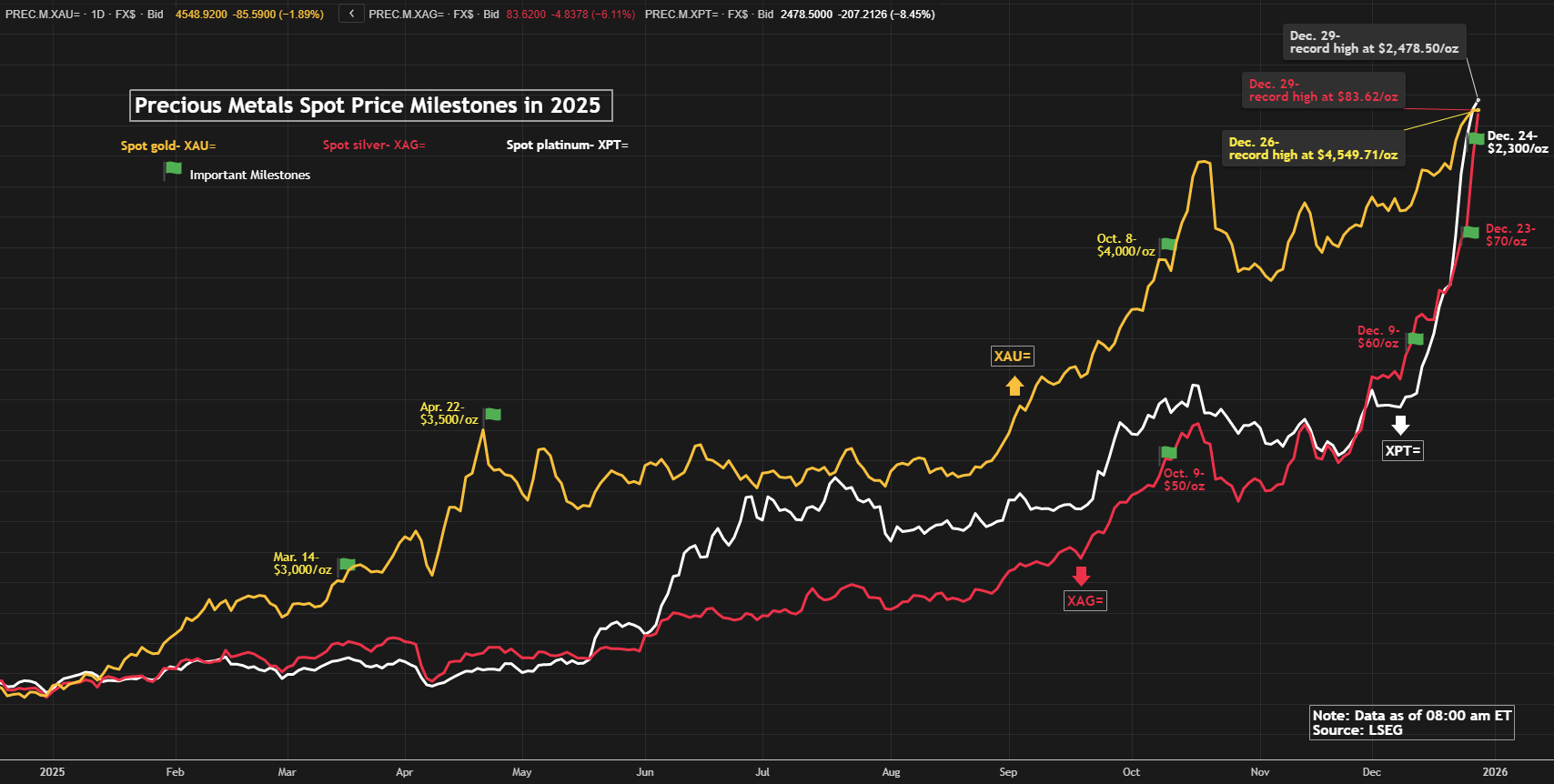
The global precious metals market is experiencing a notable pullback as investors lock in profits following a powerful rally that pushed several metals to record or multi-year highs. Silver and platinum, which recently surged on strong industrial demand and speculative buying, have retreated sharply, while gold and palladium have also softened.
This correction does not signal a collapse of the precious metals bull market. Instead, analysts describe the move as a healthy consolidation, driven by profit-taking, higher trading margins, and shifting short-term sentiment. In this blog, we explore what caused the drop, how each metal is reacting, and what investors should expect next.
Why Precious Metals Are Falling Now
After months of strong gains, the precious metals market entered overbought territory. Prices climbed rapidly due to a combination of:
-
Safe-haven demand
-
Expectations of interest rate cuts
-
Central bank gold buying
-
Strong industrial demand for silver and platinum
When prices rise too fast, profit-taking becomes inevitable. Traders who bought earlier at lower levels often sell to secure gains, triggering short-term price declines.
In addition, exchanges raised margin requirements for metals futures, increasing the cost of leveraged trading. This forced some investors to reduce positions, adding further pressure to prices.
Silver Retreats From Record Highs
Silver has been one of the best-performing commodities in recent months. Often referred to as “gold on steroids,” silver benefits from both safe-haven demand and industrial use, particularly in solar panels, electronics, and electric vehicles.
What Happened to Silver Prices?
Silver recently surged to record highs before pulling back sharply as traders booked profits. The speed of the rally left little technical support, making the metal vulnerable to a correction.
Key factors behind silver’s retreat include:
-
Heavy speculative positioning
-
Profit-taking by institutional investors
-
Reduced momentum after margin hikes
Despite the decline, analysts remain optimistic about silver’s long-term outlook, especially as green energy demand continues to grow.
Platinum Slides After Strong Rally
Platinum also retreated from record levels after a powerful run driven by tight supply conditions and rising industrial demand. Used extensively in automobile catalytic converters, hydrogen fuel cells, and industrial applications, platinum has benefited from structural supply shortages.
Why Platinum Corrected
The pullback in platinum prices reflects:
-
Short-term profit-taking
-
Concerns about global economic growth
-
Reduced speculative interest after rapid gains
However, many experts believe platinum remains fundamentally strong due to:
-
Limited mine supply
-
Rising demand from clean-energy technologies
-
Substitution demand from automakers
Gold Also Softens but Holds Firm
Gold prices have also eased, though declines have been more modest compared to silver and platinum. Gold remains supported by its role as a store of value amid geopolitical uncertainty, high government debt, and long-term inflation risks.
Gold Market Dynamics
Gold’s pullback is largely technical rather than fundamental. Investors are waiting for:
-
Signals from central banks on interest rates
-
Inflation data
-
Currency market movements
While short-term traders take profits, central banks and long-term investors continue accumulating gold, providing strong downside support.
Impact of Profit-Taking on Commodity Markets
Profit-taking is a normal and healthy part of financial markets. When prices move too far, too fast, corrections help reset valuations and reduce excess speculation.
In the precious metals market, profit-taking:
-
Improves long-term sustainability of rallies
-
Creates better entry points for new investors
-
Reduces market overheating
Such corrections often strengthen bull markets rather than end them.
Investor Sentiment Turns Cautious
As prices decline, short-term sentiment has turned cautious. Traders are adopting a wait-and-see approach, watching for confirmation of either further downside or renewed momentum.
Key risks investors are monitoring:
-
Slower global economic growth
-
Stronger US dollar
-
Delays in interest rate cuts
However, longer-term sentiment remains constructive, particularly for gold and silver.
What This Means for Investors
For investors, the recent drop presents both risks and opportunities.
Short-Term Traders
Volatility may remain elevated as markets digest recent gains. Tight risk management is essential, as prices could swing sharply in either direction.
Long-Term Investors
Corrections often provide attractive buying opportunities. Fundamentals supporting precious metals—such as inflation hedging, industrial demand, and supply constraints—remain intact.
Diversification across metals can also reduce risk, as gold, silver, and platinum respond differently to economic conditions.
Outlook for Precious Metals
Despite the current pullback, the broader outlook for precious metals remains positive.
Bullish Factors Ahead
-
Potential interest rate cuts
-
Central bank gold accumulation
-
Green energy demand boosting silver and platinum
-
Geopolitical uncertainty
Short-Term Risks
-
Continued profit-taking
-
Stronger dollar
-
Economic slowdown
Most analysts expect prices to stabilize and consolidate before the next major move.
Final Thoughts
The recent decline in precious metals prices highlights the impact of profit-taking after a historic rally. Silver and platinum may have retreated from record highs, but their long-term fundamentals remain strong. Gold continues to act as a stable anchor in an uncertain global environment.
Rather than signaling weakness, this correction reflects a market taking a breath. For investors with patience and a long-term view, precious metals may still shine brightly in the months and years ahead.