A Major Shift in Middle East Politics
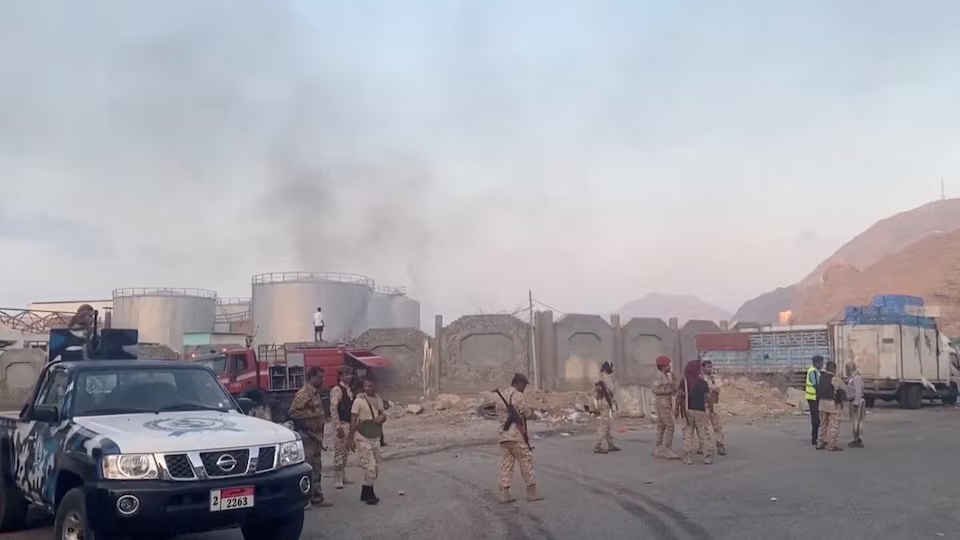
In a major shift in the dynamics of the Middle East, the UAE (United Arab Emirates) has announced its decision to withdraw forces from Yemen. This move marks a significant step in the ongoing conflict that has ravaged the country since 2014, and its implications are vast, not only for Yemen but for the broader regional balance of power.
The Yemen War, which has drawn in numerous international actors, including Saudi Arabia and the UAE, has left the country divided, with large parts of Yemen controlled by Houthi rebels. The UAE’s withdrawal signals a potential shift in the nature of foreign involvement in Yemen and could have far-reaching consequences for the Gulf Cooperation Council (GCC) and the wider Middle East. In this blog, we will explore the UAE’s role in Yemen, the reasons behind its military pullback, and what this move means for Yemen and its neighbors.
1. The UAE’s Role in Yemen’s Conflict
A. The Beginning of UAE’s Involvement in Yemen
The Yemen conflict escalated into a regional war in 2015 when Saudi Arabia, backed by a coalition of GCC countries (including the UAE), intervened to support the internationally recognized government of President Abdrabbuh Mansur Hadi. This came after the Houthi rebels, an Iranian-backed militia group, seized control of the Yemeni capital, Sanaa. The war has since become one of the most devastating humanitarian crises in modern times.
The UAE played a significant role in this coalition, providing military support and deploying troops to battle the Houthis, as well as training and arming local militias. These militias, notably the Southern Transitional Council (STC), were often aligned with the UAE’s strategic interests in the region. The UAE’s military presence in Yemen was primarily focused on protecting key coastal areas, securing the Bab al-Mandeb Strait, and countering Iranian influence in the region.
B. The UAE’s Strategic Interests in Yemen
The UAE’s involvement in Yemen was driven by a combination of geopolitical interests, economic goals, and security concerns. Strategically, the UAE sought to ensure that the Bab al-Mandeb Strait, a key chokepoint for global shipping, remained secure and free from Iranian influence. The UAE also wanted to counter the rise of Islamist extremism in Yemen, which threatened both domestic and regional stability.
Economically, the UAE had investments in ports and infrastructure in southern Yemen, especially around Aden and the island of Socotra, where it hoped to establish a stronger presence. These interests were not only about controlling trade routes but also about exerting influence in a strategically vital region.
However, the complexity of the conflict and the growing humanitarian crisis in Yemen eventually led the UAE to reconsider its military footprint in the country.
2. Why the UAE Decided to Withdraw Its Forces
A. Rising Costs of the Yemen War
One of the main factors driving the UAE’s withdrawal from Yemen was the costs of continued military involvement. The war has been long and brutal, with no clear victory in sight. Thousands of lives have been lost, and the conflict has caused a severe humanitarian disaster, with millions of Yemenis displaced and in need of aid. The UAE, while committed to its strategic goals, faced mounting pressure both domestically and internationally over the consequences of the war.
Additionally, the UAE’s forces were becoming increasingly involved in intense combat operations, especially in areas like Hodeidah and Taiz, which led to significant military casualties. The financial and military burden of sustaining these operations, combined with the absence of a clear endgame, led to growing frustration within the UAE’s leadership.
B. A Shift Toward Diplomacy and Regional Stability
The UAE has also expressed a shift toward diplomatic solutions in the region, particularly in terms of regional stability. The growing role of Saudi Arabia in the Yemeni conflict, combined with its own strategic needs in Saudi Arabia’s Vision 2030, pushed the UAE to recalibrate its approach to the conflict. The UAE has been focusing on engaging with regional players like Iran and Turkey to pursue alternative routes to peace.
Furthermore, the UAE has been improving its diplomatic relations with various regional actors and sought to position itself as a mediator rather than just a combatant in conflicts. This move is consistent with its broader foreign policy goals of promoting stability, security, and economic growth in the Gulf and beyond.
C. The Changing Nature of the GCC
The relationship between the UAE and its Gulf allies, particularly Saudi Arabia, also played a role in the decision to withdraw. While both countries initially shared common objectives in Yemen, differences in strategy began to emerge. Saudi Arabia continued to push for a more robust military solution, while the UAE shifted its focus toward countering the Iranian influence more directly in Syria and other areas of the region, such as Libya.
The UAE’s decision to scale back its military commitment in Yemen reflects these changing priorities within the Gulf Cooperation Council (GCC). It also highlights the evolving nature of the UAE’s foreign policy, moving away from large-scale military interventions and toward a more diplomatic approach in achieving its strategic objectives.
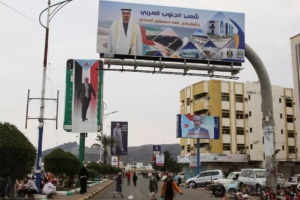
3. What Does the UAE’s Withdrawal Mean for Yemen and the Region?
A. Impact on the Conflict in Yemen
The UAE’s withdrawal could have several implications for the ongoing conflict in Yemen. First, it could shift the power dynamics on the ground. Houthi rebels, who have been gaining territory, could see this as an opportunity to consolidate power, especially in the absence of UAE-backed forces that had previously provided military and logistical support to local militias.
The Southern Transitional Council (STC), which has been supported by the UAE, could face challenges in maintaining control over southern regions of Yemen. This could lead to further fragmentation in Yemen, as different factions jostle for power in a country already divided along political and ethnic lines.
However, the UAE’s departure also opens the door for more diplomatic efforts to resolve the conflict. As one of the primary military actors, the UAE’s withdrawal could encourage other international players to step up their involvement in peace talks, providing an opportunity for a comprehensive political settlement.
B. Impact on Saudi Arabia and the GCC
The UAE’s decision to pull back from Yemen also affects Saudi Arabia, its key regional ally. The kingdom now faces the challenge of continuing its military efforts without the significant support it previously received from the UAE. This may put additional strain on Saudi resources, especially as it faces other security challenges in the region.
The GCC, as a whole, might experience tensions as its member states adopt different approaches to regional conflicts. The UAE’s exit from Yemen could create fissures within the Gulf alliance, with countries like Qatar and Oman potentially seeking to distance themselves from the war, while others like Saudi Arabia remain committed to military action.
C. Regional Stability and the Broader Middle East
Beyond Yemen, the UAE’s withdrawal from the conflict could have broader implications for Middle Eastern stability. With Iran playing a significant role in the region’s conflicts, the UAE’s exit may signal a shift in the balance of power in the Gulf. It may encourage greater dialogue between regional powers, reducing the likelihood of prolonged hostilities.
Furthermore, the UAE’s commitment to peaceful engagement could lead to a broader regional detente, with countries like Saudi Arabia, Iran, and even Turkey seeking more stable relationships to secure long-term security and economic benefits.
4. The Future of UAE’s Foreign Policy: Shifting Priorities
A. Focus on Soft Power and Economic Diplomacy
The UAE is positioning itself to shift its foreign policy priorities away from military engagements and toward economic diplomacy and soft power. As it diversifies its global partnerships, especially in Africa, Asia, and Europe, the UAE is likely to place more emphasis on economic cooperation, humanitarian aid, and trade agreements.
The UAE’s withdrawal from Yemen could pave the way for it to play a more prominent role in mediating and facilitating peace talks in the region, thus maintaining influence without direct military intervention. This will allow the UAE to preserve its political capital and continue its role as a regional power broker.
B. Greater Focus on Humanitarian Efforts
As the UAE shifts its focus away from military intervention, it may also increase its humanitarian efforts in Yemen. The country has already been involved in providing aid to the Yemeni people, particularly in the areas of healthcare, food, and infrastructure. Increased emphasis on humanitarian assistance can help rebuild Yemen while maintaining the UAE’s standing in the region as a contributor to peace and development.
5. Conclusion: A Turning Point for Yemen and the UAE
The UAE’s decision to withdraw its forces from Yemen is a significant moment in the ongoing conflict, marking a potential shift in the region’s power dynamics. While the war in Yemen is far from over, the UAE’s exit could bring about new opportunities for peace negotiations and further complicate the struggle for control in Yemen.
For the UAE, this move represents a recalibration of its foreign policy, focusing on diplomatic, economic, and humanitarian solutions to the region’s challenges. As Yemen’s future hangs in the balance, the broader Middle East may face a new phase of uncertainty — one that requires careful diplomacy, collaboration, and a commitment to peace.
The UAE’s withdrawal marks not the end of its involvement in the region but rather the beginning of a new chapter in how it engages with its neighbors and the world at large. Only time will tell how this decision will shape the future of Yemen and the Middle East.