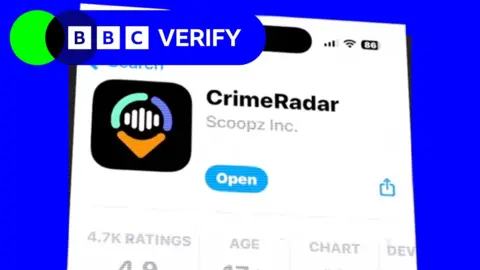
In an age where technology is increasingly being integrated into everyday life, the use of artificial intelligence (AI) for monitoring and reporting crime may seem like a convenient and efficient solution. However, a recent controversy has shed light on the potential dangers of relying too heavily on AI-driven platforms for sensitive issues like public safety.
CrimeRadar, an AI-powered app designed to monitor police radio communications and issue real-time crime alerts, has recently come under fire after BBC Verify uncovered several instances of false crime alerts being sent to local communities across the United States. These alerts, often about serious crimes, were found to be misleading and inaccurate, causing unnecessary panic and distress among residents.
As a result of this investigation, the company behind CrimeRadar has issued an apology to the affected communities, acknowledging the errors and promising to address the issues that led to these false alarms. In this blog post, we’ll dive into the details of the CrimeRadar app, the problems uncovered by BBC Verify, and the broader implications of relying on AI for crime reporting.
How CrimeRadar Works: The AI Behind the Alerts
CrimeRadar’s primary function is to monitor publicly available police radio communications and use artificial intelligence to automatically generate transcripts of those communications. From these transcripts, the app then creates and sends crime alerts to users, with the goal of keeping local residents informed about nearby incidents.
The app is designed to provide real-time updates about various types of crimes, from thefts and burglaries to more serious incidents like shootings or violent crimes. The premise is simple: by leveraging AI to track police scanners, CrimeRadar offers an immediate and convenient way for people to stay informed about public safety.
While this concept sounds promising, it’s not without its potential pitfalls. As BBC Verify discovered, the app’s reliance on automated transcription and analysis has led to several inaccuracies, with some alerts containing false or misleading information. This flaw became apparent after several reports of incorrect crime alerts sent to residents in various U.S. cities.
The Problem: False Crime Alerts Sent Across the U.S.
The recent BBC Verify investigation uncovered a series of troubling incidents in which CrimeRadar sent misleading crime alerts to users. The problem was not limited to one region; reports surfaced from a wide range of U.S. states, from Florida to Oregon.
In some cases, CrimeRadar alerted users about serious incidents, such as shootings or violent crimes, that had either not occurred or had been misreported. The app’s reliance on AI to generate transcripts from police radio communications meant that certain words or phrases were misinterpreted, resulting in incorrect alerts being sent to users.
These errors raised significant concerns, particularly because many of the alerts related to violent crimes. For residents receiving these notifications, the false alarms caused unnecessary fear and anxiety. In certain cases, people who received the alerts rushed to protect their families or avoid areas they believed to be unsafe—actions that, in hindsight, were based on inaccurate information.
One of the most significant issues highlighted by the investigation was the lack of human oversight in the app’s alert system. While CrimeRadar’s AI system is designed to automatically process police radio transmissions and create crime reports, there seems to be no robust system in place for verifying the accuracy of the information before it is shared with the public.
The Apology: CrimeRadar Acknowledges the Issue
In the wake of the BBC Verify investigation, CrimeRadar has issued an official apology to the affected communities and users. The company acknowledged the distress caused by the false crime alerts and assured the public that they are taking immediate steps to rectify the problem.
The company explained that the inaccuracies were due to errors in how the AI system interpreted police communications, which led to the generation of incorrect alerts. CrimeRadar further stated that they are reviewing their system to ensure that better safeguards are implemented moving forward. Specifically, they plan to enhance the accuracy of the AI’s transcription process and to introduce more robust checks before alerts are sent to users.
While the apology was welcomed by many, it raised an important question: how can we trust an AI-powered system to report critical information—such as crime alerts—if it is not fully capable of ensuring accuracy and reliability?
Implications of AI in Crime Reporting
This incident highlights the broader concerns around the use of AI in systems that directly impact public safety. While AI has the potential to greatly enhance our ability to monitor and respond to crimes in real-time, it also presents significant risks when the technology isn’t perfected or fails to operate as intended.
-
Accuracy and Accountability:
The issue with CrimeRadar underscores the importance of accuracy in AI-powered systems. When it comes to crime reporting, even a minor mistake can have serious consequences. False alarms not only cause panic but can also undermine public trust in the technology. There’s also the question of accountability: who is responsible when AI fails to deliver accurate information? Should companies like CrimeRadar be held accountable for the distress their systems cause, or is this simply a consequence of imperfect technology? -
Human Oversight:
One of the key lessons from this situation is the need for human oversight in AI-driven systems. While AI can process vast amounts of data quickly, it is still prone to errors, especially when it comes to interpreting nuanced information like police radio chatter. Having humans in the loop—whether for verification or quality control—could prevent errors from reaching the public. -
Ethical Concerns:
The use of AI to monitor police communications raises ethical questions about privacy and data security. While the data is publicly available, the fact that it is being processed by a private company for profit introduces concerns about how the data is used and whether it could be exploited. There’s also the matter of potential bias in AI systems, which could result in certain communities being disproportionately affected by crime alerts.
What’s Next for CrimeRadar and AI in Crime Reporting?
In response to the false alarm scandal, CrimeRadar has committed to improving its technology and ensuring that the app provides accurate, reliable crime alerts moving forward. While the company has apologized and promised to make changes, the incident has left many users questioning whether AI should be trusted in such high-stakes situations.
As AI technology continues to evolve, it’s likely that we will see more companies exploring the use of AI for crime monitoring. However, this incident serves as a reminder that technology, especially in critical areas like public safety, must be carefully scrutinized and continually improved.
For now, the public will be watching closely to see how CrimeRadar addresses these issues and whether AI can be effectively integrated into crime reporting without compromising accuracy or public trust.
Conclusion: The Need for Balance in AI-Driven Systems
As we move forward in the age of AI, it’s essential that we strike a balance between innovation and responsibility. AI has immense potential to improve our lives, but it also carries risks—particularly when it’s used in critical areas like crime reporting. The CrimeRadar incident highlights the need for more careful implementation, human oversight, and transparency.
While CrimeRadar’s apology is a step in the right direction, the real test will be whether they can implement changes that restore confidence in their app. For now, this incident serves as a cautionary tale for the wider use of AI in public safety, urging both companies and users to tread carefully when it comes to trusting technology with something as important as crime alerts.