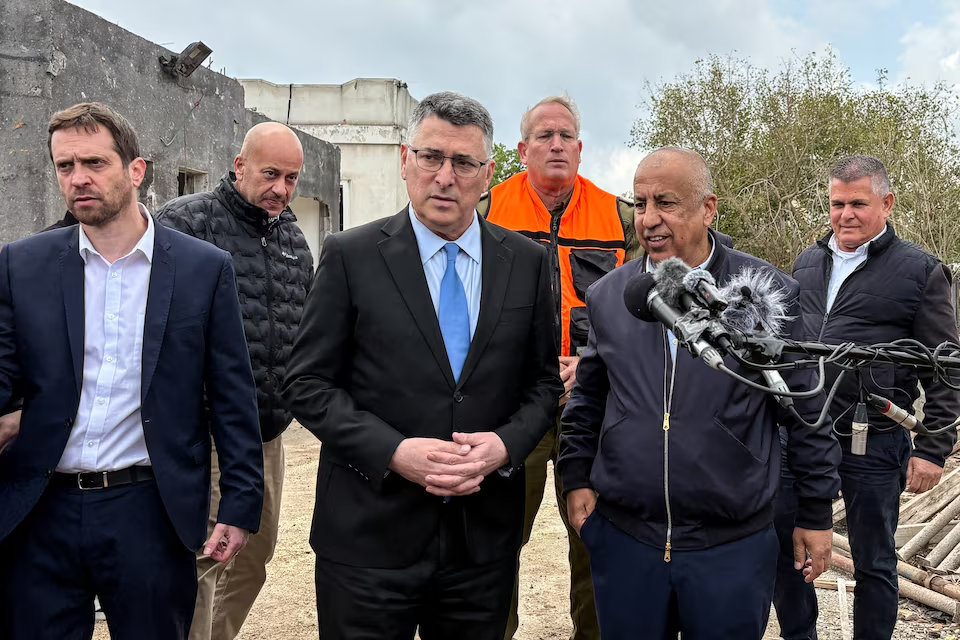
Israel’s Foreign Minister Gideon Saar has stated that the country has effectively “won” its ongoing war with Iran, despite acknowledging that key objectives have not yet been fully achieved and military operations are still ongoing.
Speaking at a press conference in Jerusalem, Saar emphasized that Israel has significantly weakened Iran’s military capabilities, particularly its ability to launch long-range attacks. However, he made it clear that the campaign would continue until all strategic goals are met.
No Clear End in Sight
Although Israeli leadership is projecting confidence, there is still no official timeline for when the conflict will end. Saar noted that patience is required, indicating that military operations could extend for weeks or longer.
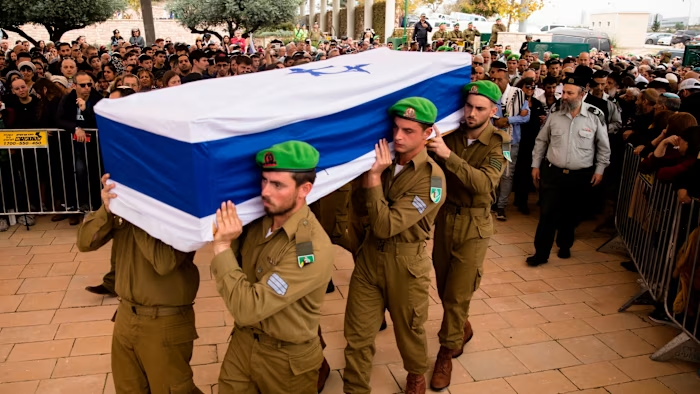
The war, now in its third week, has already resulted in more than 2,000 deaths across multiple countries, including Iran, Lebanon, Israel, Iraq, and parts of the Gulf region. The scale of the conflict highlights its regional impact and growing humanitarian concerns.
Israel’s Objectives
According to Israeli officials, the main goals of the campaign include:
-
Eliminating what they describe as “existential threats” from Iran
-
Disrupting Iran’s ballistic missile capabilities
-
Targeting nuclear-related facilities
-
Weakening Iran’s regional influence
While some officials have suggested that internal unrest in Iran could eventually lead to regime change, Saar acknowledged that such an outcome would depend entirely on the Iranian people—not external forces.
Continued Iranian Resistance
Despite Israeli claims of success, Iran continues to demonstrate its military capability. On the same day as Saar’s remarks, Iran launched multiple missile attacks toward Israel, showing that it still retains significant offensive power.
This ongoing exchange of attacks suggests that, while Israel may have achieved tactical gains, the broader conflict remains unresolved.
Regional Escalation
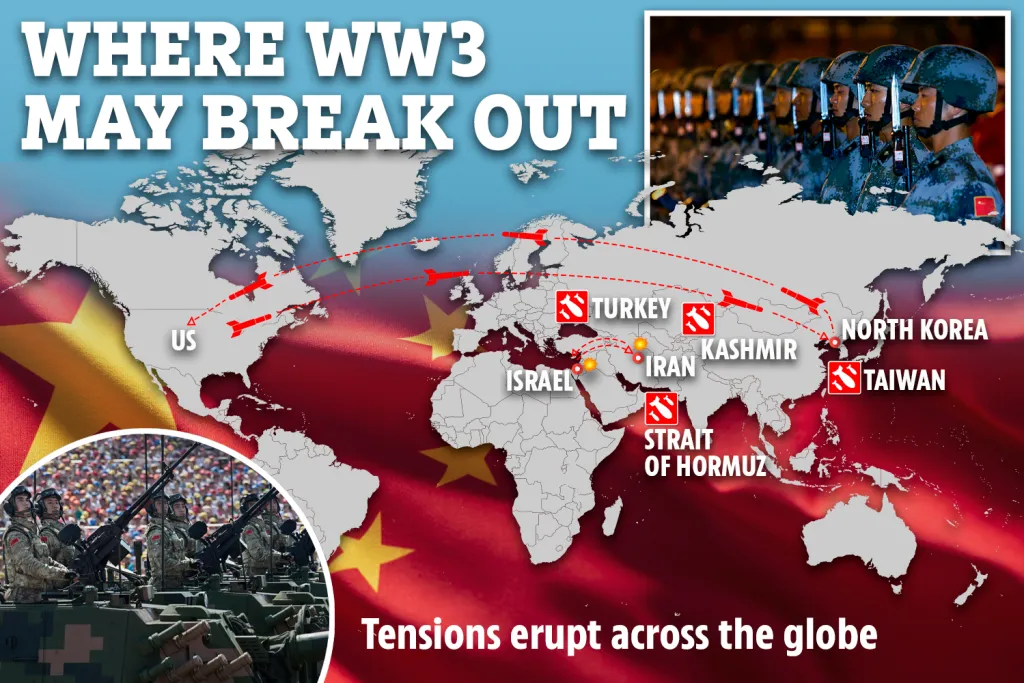
The war has expanded beyond Israel and Iran, pulling in other actors across the Middle East. Israel is also engaged in conflict with Hezbollah in Lebanon, an Iran-backed group, further intensifying regional instability.
In a major escalation, Iran has reportedly restricted access to the Strait of Hormuz—a critical global shipping route through which around 20% of the world’s oil and liquefied natural gas supplies pass. This move has raised serious concerns about global energy markets and potential inflation.
Global Reactions
The United States has been actively involved in the conflict alongside Israel, though its messaging has been inconsistent regarding the duration and end goals of the war. Some U.S. allies have criticized the lack of prior consultation before military action began and have hesitated to provide additional support, such as naval escorts in the Gulf.
Israel has condemned Iran’s actions in the Strait of Hormuz, labeling them as “modern piracy” and warning that the situation poses a threat to global stability.
Conclusion
While Israel claims to have gained the upper hand, the war with Iran is far from over. Continued missile exchanges, regional involvement, and global economic implications suggest that the conflict could persist and potentially escalate further.